|
| Repair Articles |
|---|
| Ask The Repairman |
| Repair Blue Book |
| Hardware Parts Accessories |
| Electronics |
| Guitar Wood and Kits |
| Tools |
| Friends |
|
|
|
|
|
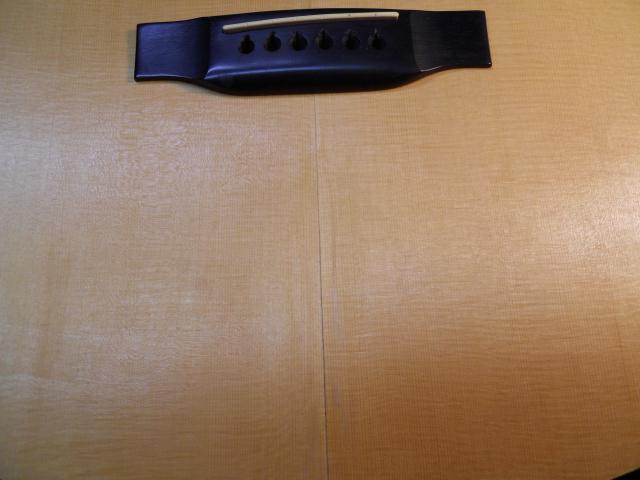
HUMIDIFY YOUR GUITAR- NOW!By Steve CarmodyIt's winter here in the Mid-Atlantic states. Once the heat has been on for for a solid week, I don't need to check the hygrometer to know that it's time to start running the humidifier. Relative humidity of less than 40%, over time, can cause many guitars and other wooden things to crack, and due to this seasonal drop in humidity I inevitably see more instruments coming in for repair of cracks in the top, and string buzz problems. But the most insidious thing about the drop in humidity is that its effects may not be noticed for a month or two. Most people who come to me because there are cracks in their instruments arrive in January, February and March. And almost to a person, they say: "It was fine last week and then I opened the case and it was cracked." Well actually, in most cases, the guitar had been drying out for two months or so, and didn't reach the point where it was so dry that it couldn't contain itself until "this week". That is why it is critical to start humidifying your house, room or the guitar itself- now. Cracks caused by dry air are almost always along the grain lines in the area between the bridge and the butt end of the instrument. The soft light wood between the darker grain lines shrinks due to the lack of moisture and separates from the denser and stiffer winter growth. Cracking can also occur on the top next to the fretboard extension above the soundhole. Here is a picture of a classic center-seam crack, right down the glue joint on the top below the bridge.
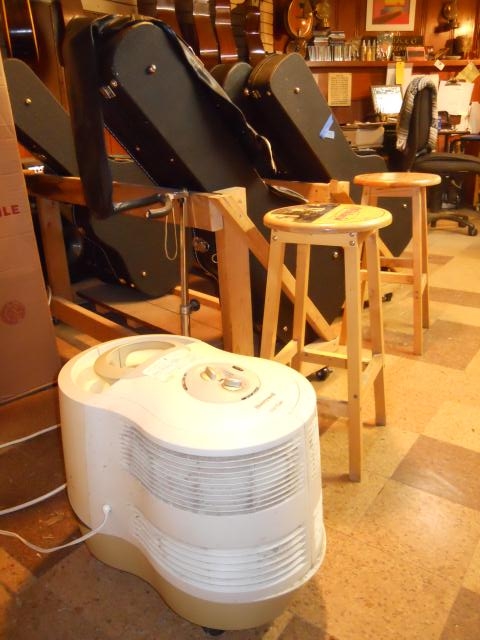
In some cases these cracks can be cleanly repaired, with relatively little evidence of the repair, if the instrument is brought to a repairman as soon as it becomes apparent that there is a crack. Most repairmen charge by the inch for crack repair, so the shorter the crack the cheaper the repair. Dirt and oil that works its way into a crack over time makes it more difficult for the repairman to hide the repair, so, early detection and repair gives the best potential for a more elegant end result. To avoid cracks which result from seasonal drops in humidity you must always be conscious of the dryness of your home/store environment. Many people who have forced-air heating have a humidifier built into their system. If you are one of the fortunate, just set it for a minimum of 45 % relative humidity( 50% is ideal for giutars, and people) and you will probably never have a problem. For the rest of us, there are a couple of solutions. I use a whole-room humidifer in the shop, but if you have just one guitar ,you could humidify it alone with an in-guitar or in-case humidifier. Ideally, an instrument should be in its case when it is not in use. This gives it a degree of protection from the room environment. In-Guitar or in-case humidifiers, when used as directed, provide adequate protection.
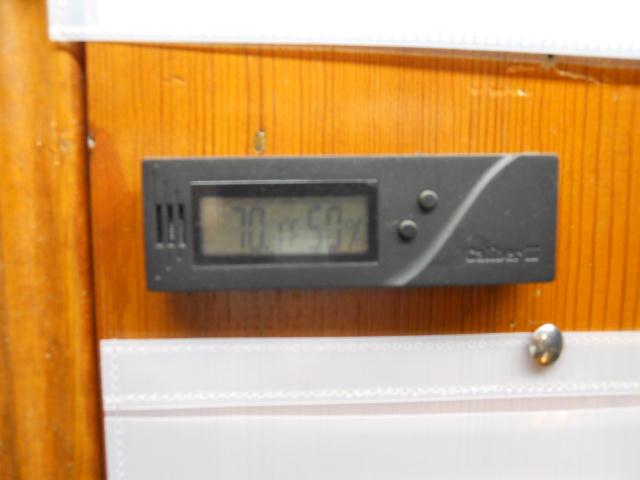
If you display your instruments, but do not have a humidifier built into your heating system, there are a number of in-room misters and vaporizers available. They work well when used as directed, the most important factor being that the room temperature should kept high enough to enable them to create the mist. In my experience, if the temperature is too low ,they will not create a mist. A low tech solution is to put a pan of water in front of a forced air vent, or on top of a radiator, but this is much less reliable and I would not recommend it. No matter which method you use, any room with instruments in it should be regularly monitored for humiditity level. The best thing you can do ensure the health of your guitar is to invest in a hygrometer with a digital readout. A hygrometer reads the amount of moisture in the area where it is located. These can range in price from $25.00 to $120.00. I have a $40.00 unit and it works just fine. Ideally, you should maintain the relative humidity at around 45 % where you store your instruments.Even if you use an in-case humidifier, you should still get an in-case hygrometer to be certain that you have adequate moisture to prevent cracking.
Overly dry air can have other effects on your guitar. One is that, as a guitar loses loses moisture, strength in the top is lost, and the top can tend to flatten. It is not unusual to get buzzing strings at this time of year, particularly if your string action was already set very low. As the top loses moisture it shrinks and settles down, taking the relative height of the bridge to the neck with it, . The net result is that the strings sit lower over the fretboard. (Conversely, in the summer higher humidity can tend to swell the top and the string height rises). While it is best to maintain the humidity level, one solution for this can be to have a second, slightly higher saddle made for use in the winter months. Indeed, some guitar makers supply a second, seasonally appropriate string saddle.
Overly dry air can also shrink ebony fretboards, causing fret ends to stick out. If this happens, the solution is to file or "dress" the ends down. Dryness, and, in turn, shrinking fretboards, can also tend to cause forward bow in the neck. Again, while proper humidity is the best solution, a remedy for this is to increase the tension on the truss rod (a quarter turn at a time until the neck shows correct relief as viewed at around the 6th fret). Better yet, keep your guitar well protected from seasonal environmental changes by maintaining proper humidity!
Steve Carmody is an independant guitar repairman and luthier with a shop in Silver Spring, Md. He has been doing guitar repair and restoration full-time since 1990. Questions about this article or anything else related to guitar repair? Send e-mail to - GuitarRepairShop@gmail.com |